
Polk County Arrest Warrants Explained
Texas judges and magistrates sign arrest warrants on probable cause. Chapter 15 of the Code of Criminal Procedure governs how they are issued, executed, noticed, and reviewed. The charge level points to the right court. In Polk County, felonies belong to the 258th or 411th District Court, with files at the District Clerk. Class A and B misdemeanors generally sit with the County Court at Law and the County Clerk. Justice of the Peace and municipal courts take the lower-level matters. The offense class, in short, tells you which clerk holds the file.
Polk County Magistrate Process
Chapter 15 spells out how an arrest warrant runs in Texas, from execution to the required trip before a magistrate. It sets no public county search. Read it for the framework, then ask the issuing Polk County court about the case itself. The Texas Code of Criminal Procedure, Chapter 15 is the official text.
The chapter sets statewide procedure. Polk County's clerk and sheriff explain their own record and service channels. A magistrate warrant is criminal process, distinct from a summons or a bench warrant after a missed setting. The clerk holds the court file. The Warrant Division handles its own service and entry duties. When you request a copy, say whether you want the signed warrant, the docket notation, or the service return. A general index can lag behind. Ask which releasable court record the clerk can provide.
Inside a Polk County Arrest Warrant
A warrant document may list the issuing court, the offense, the date, and any bond terms. Polk County publishes no public arrest-warrant sample. Use these field names to organize a question for the clerk. Never guess a local number format from another court.
| Warrant or case number | Use the number printed on official papers; no stable public sample was found. |
|---|---|
| Named person | Read the name exactly as it appears in the court document. |
| Charge | Identifies the complaint or offense tied to the process. |
| Issuing judge or court | Shows where to confirm case status and procedure. |
| Bond or bail | Ask the court or jail to confirm current terms. |
| Date and return | May show issue or service events if released in the record. |
Treat these labels as questions, not promises. A field may be withheld. Ask the Polk County clerk for the case identifier and the date checked, and if something is closed, request the legal basis and any releasable part.
Juvenile Warrant Records Are Restricted
Juvenile files do not follow the ordinary adult access rules. Texas Family Code section 58.010 keeps juvenile warrant information confidential. Identify the record and ask the Polk County clerk what may be released. The Family Code chapter is the controlling reference for that boundary.
Keep juvenile questions apart from adult arrest-warrant checks. A routine adult docket search will not surface a juvenile record in Polk County. The clerk can walk a parent or relative through the request process. A public-information request does not override those restrictions. Describe the record narrowly. Never post a minor's name or case details in a public forum. When adult and juvenile files grow from the same events, ask the clerk to separate them and explain which parts can lawfully be released.
Serving Arrest Warrants in Polk County
The Sheriff's Warrant Division enters felony, Class A, Class B, and some Class C warrants into TCIC and NCIC for dispatch use. Peace officers may serve them. Sheriff personnel, constables, and city police across Polk County all qualify. No public chart assigns every warrant. The jail handles custody and bond instructions after arrest. The issuing court still controls the case. The division also lists protective-order entries, extradition on county charges, and mental-health transports among its duties. That range does not make it the keeper of every city court file, and its staff directory and division page disagree on the named contact. For county service questions, call the Warrant Division at 936-329-9016 weekdays, 8 a.m. to 5 p.m. Dispatch at 936-327-6810 takes after-hours non-emergency calls. Ask whether the issue is county entry, Polk County jail custody, or the court docket.
TCIC and NCIC Are Not Public Search
TCIC and NCIC are closed law-enforcement databases. The public Sheriff's channel in Polk County is a curated Wanted List plus a weekday phone line. A member of the public cannot run a name check there. No commercial data product replaces those systems. The division page and staff directory also disagree on a contact name. Call the published Warrant Division number before sending anything. Bring court-file questions to the clerk instead. Ask the sheriff about Polk County service records. Ask the issuing clerk about the signed court process. If another agency holds the entry, that agency must confirm it itself. Keep each request to the record type that office actually maintains.
Comparing Arrest, Summons, and Bench Warrants
Courts use these terms for different actions. An arrest warrant lets peace officers make an arrest on probable cause. A summons orders an appearance instead. A bench warrant follows a missed court obligation, and a bench-warrant case returns to the Polk County court that set the earlier case.
| Feature | Arrest Warrant | Summons | Bench Warrant |
|---|---|---|---|
| What it orders | Arrest under criminal process | Appear as directed | Respond to an earlier court obligation |
| Basis | Probable cause of an offense | Notice to appear in a case | Failure to appear or comply |
| Who issues | Judge or magistrate | Court or authorized officer | Judge in the existing case |
| Next step | Ask counsel and court about bond or appearance | Follow the date and instructions | Ask the court about setting or recall |
Polk County Arrest and Booking Records
A court-filed arrest warrant and a sheriff offense report are two different Polk County records, and confusing them wastes a request. Start there. One comes from the issuing court. One sits in the sheriff's file. County Records accepts requests through NextRequest, email, drop box, or mail, and state law allows active-investigation information to be withheld. Ask for segregable portions and a cost estimate. For a felony court file, contact the District Clerk; for a sheriff-held document, use the County Records route. The Polk County Sheriff's Jail Information page answers custody questions rather than serving as a warrant index. Need both? Make separate requests. Give each office the record type, date range, case number, and your contact information. A booking entry, an offense report, and a court-filed warrant describe different events and may carry different identifiers and custodians. A response during an open investigation can be limited. It does not confirm whether process remains active, so ask the issuing court in Polk County for that answer.
If There's an Arrest Warrant for You
Find out which court issued the paper and whether it is still active before you act. A lawyer can verify the file. Counsel can also request a setting, discuss bond, or arrange a voluntary surrender at the Polk County court. No universal walk-in appointment exists. There is no standard recall form either. If you cannot tell an arrest warrant from bench process, ask the court to identify it. Hand over the cause number and issuing court. Then ask the clerk whether the process is active, what bond applies, and whether a hearing or filing is required. A public wanted page with no match cannot answer any of that.
Important: Speak with counsel and the issuing court before appearing; Polk County does not publish one surrender process for every case.
Federal Warrant Files Are Separate
Federal cases do not run through Polk County's state or municipal channels. Use PACER for public docket information. Contact the Eastern District of Texas, Beaumont Division, or the U.S. Marshals for the federal route named in your paperwork. Sealed or unserved warrants may stay out of public results.
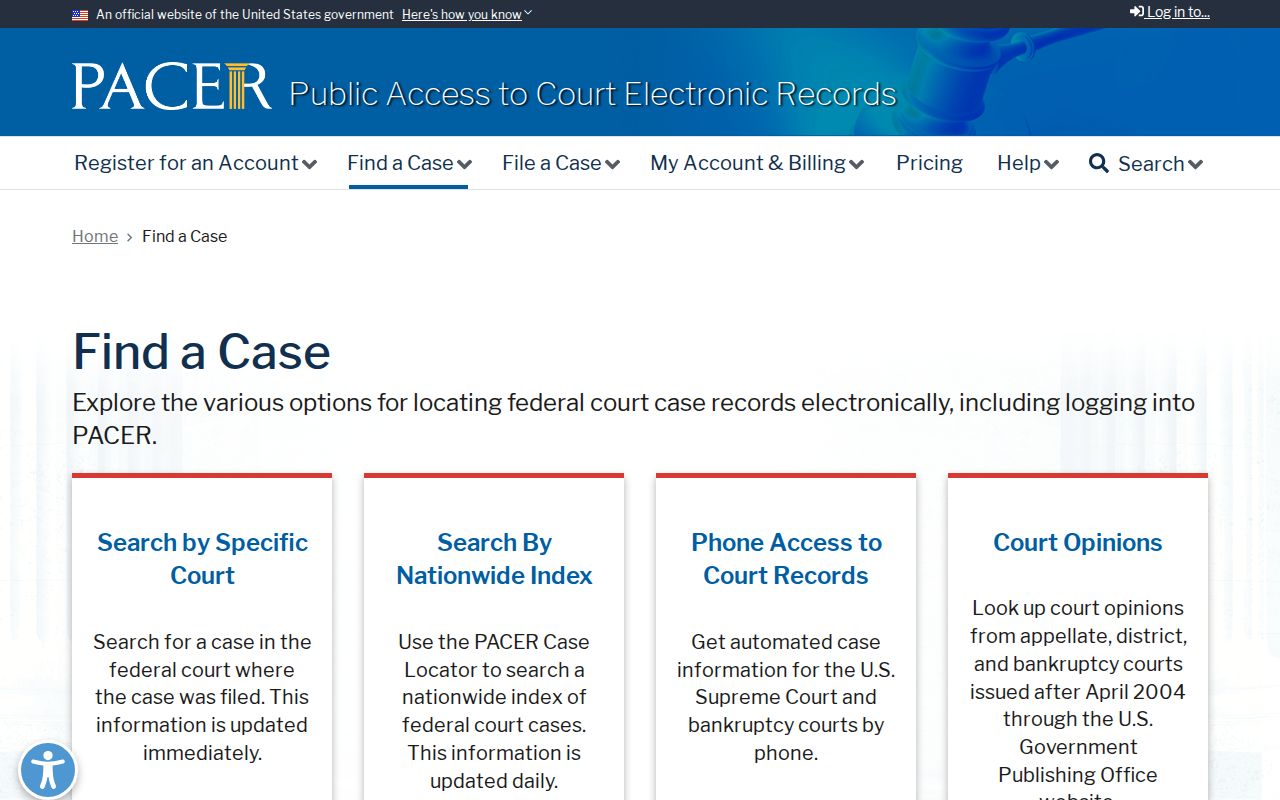
The Beaumont Division page lists the federal courthouse contact and security details, though the case itself sits outside Polk County.
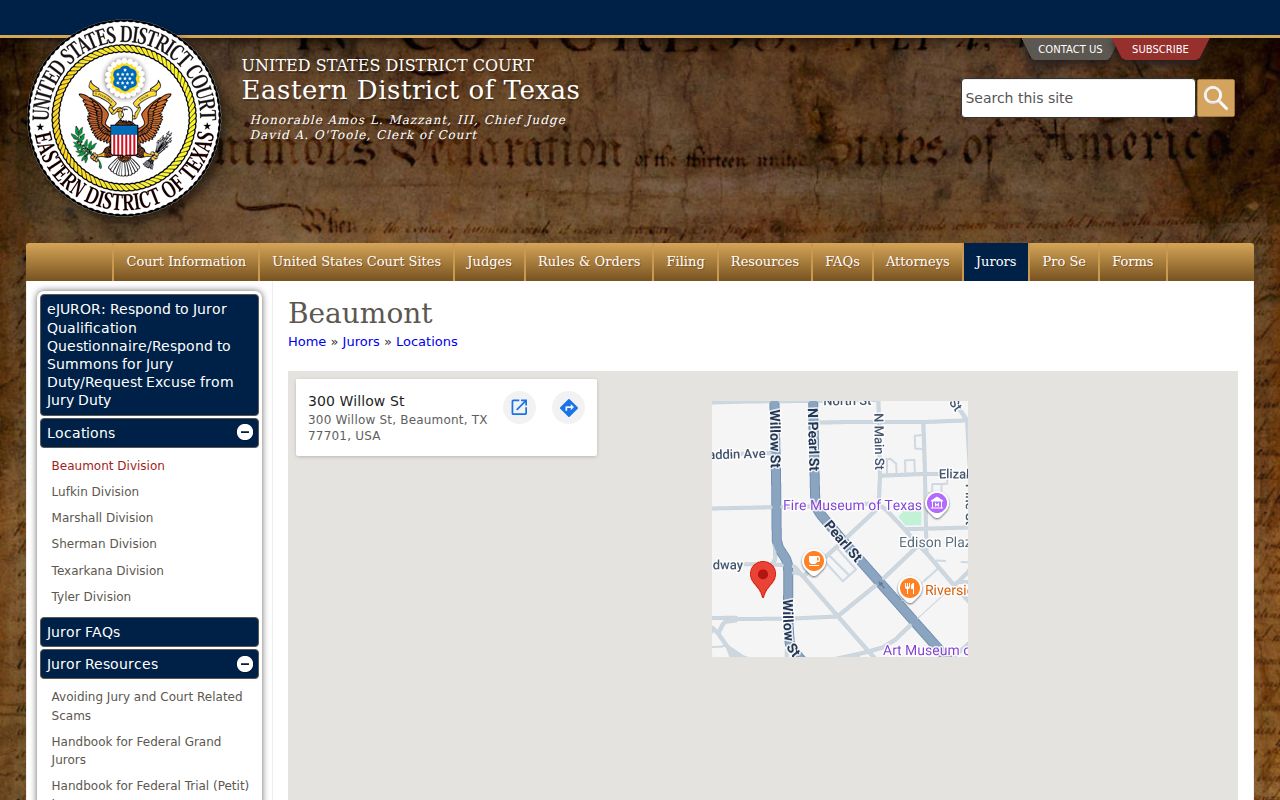
These federal tools add to the Polk County court route. PACER is a paid docket service, not a law-enforcement status line. Check results by court and case number. Follow the federal court or U.S. Marshals instructions. A docket match alone cannot reveal sealed material or prove a warrant remains unserved.